Relay
A companion for music, a little writing, and the apps you choose.
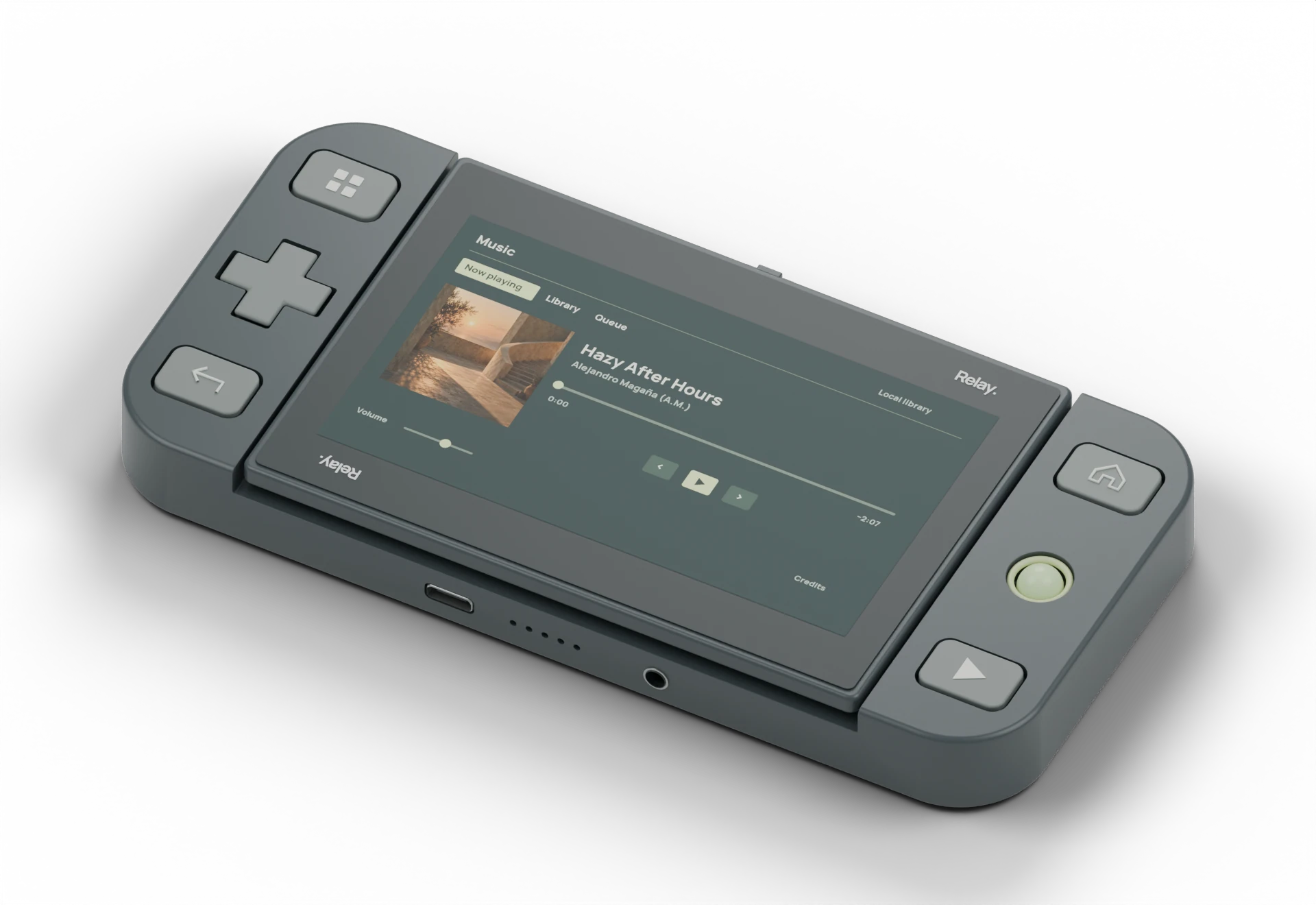
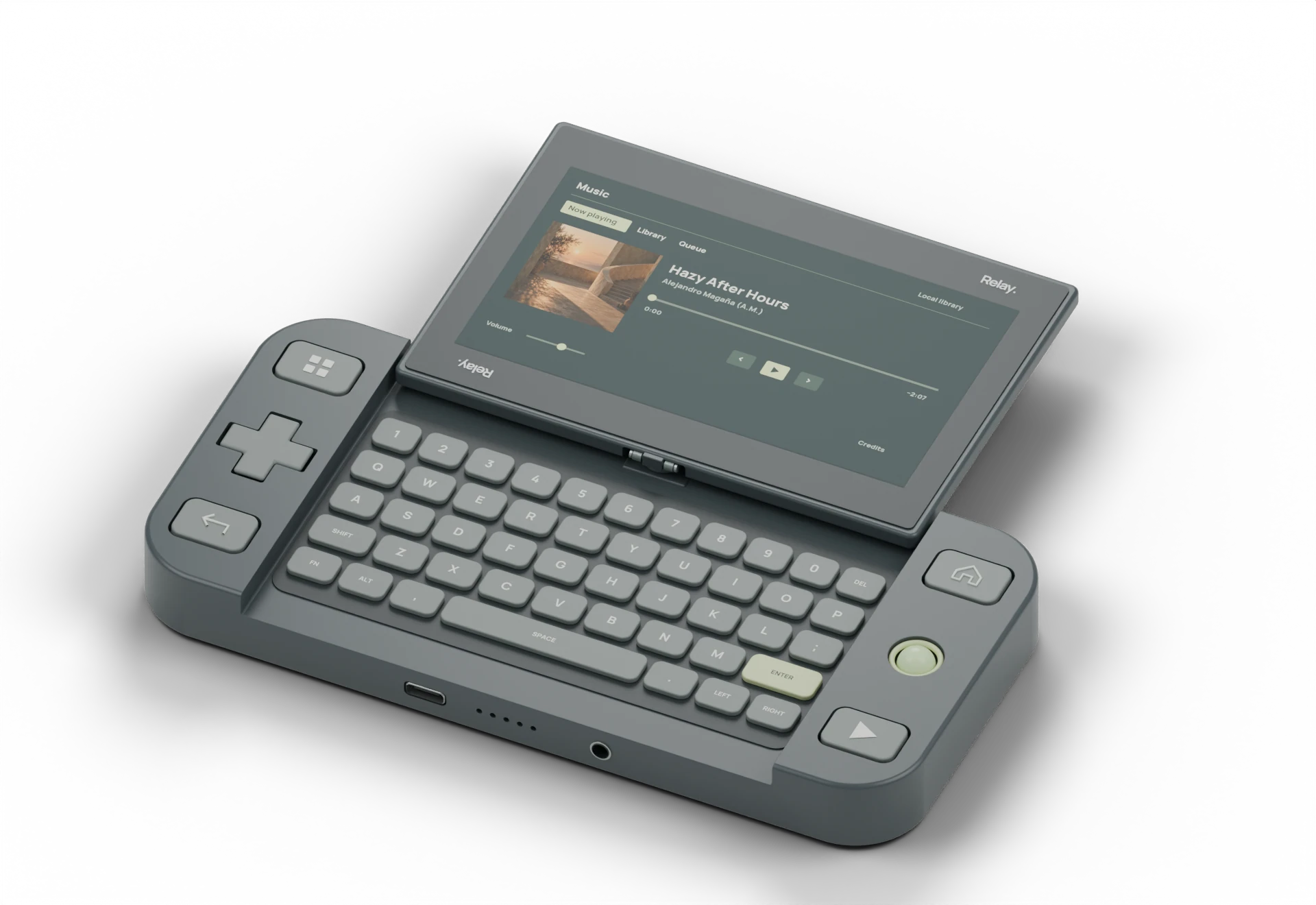
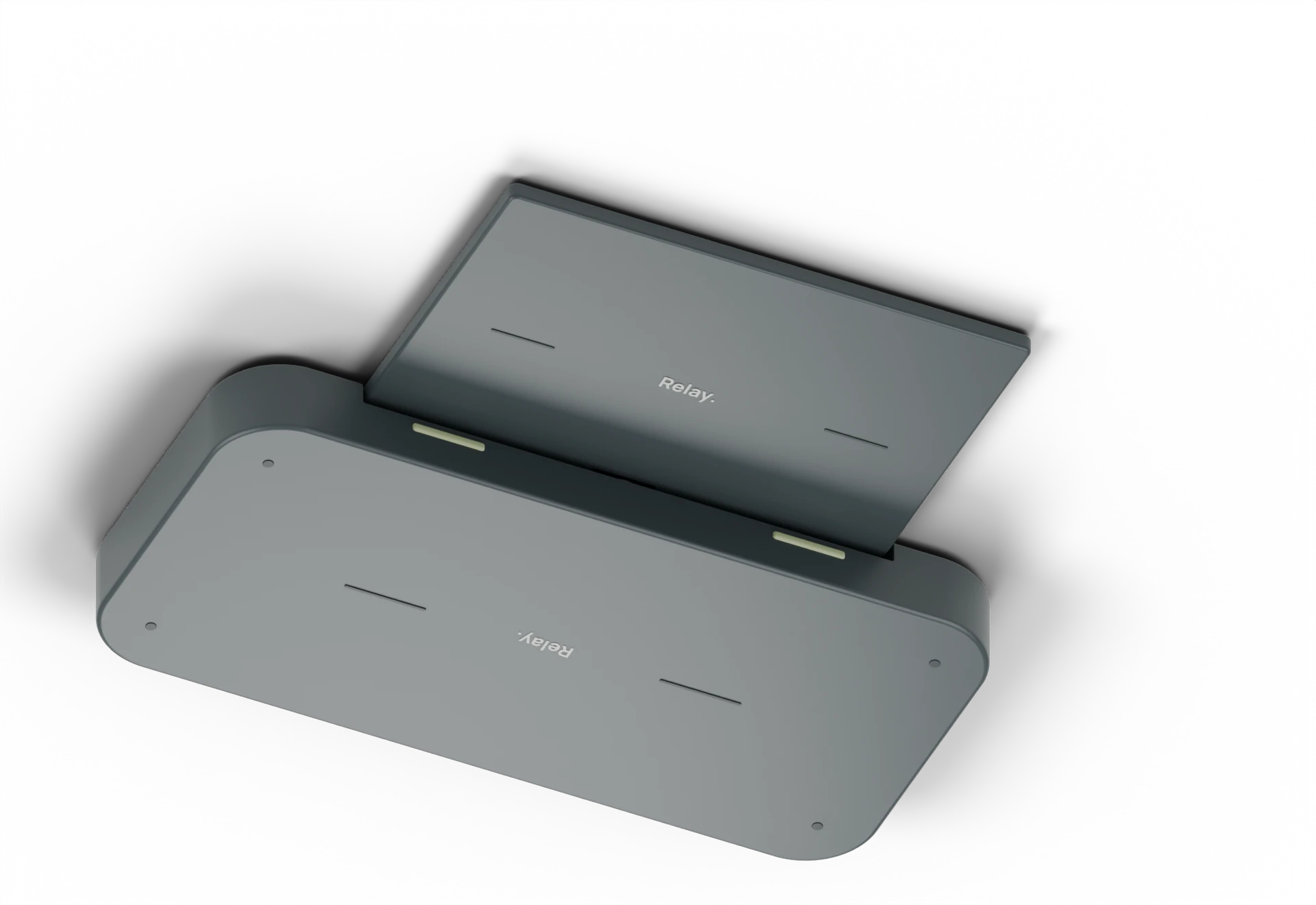
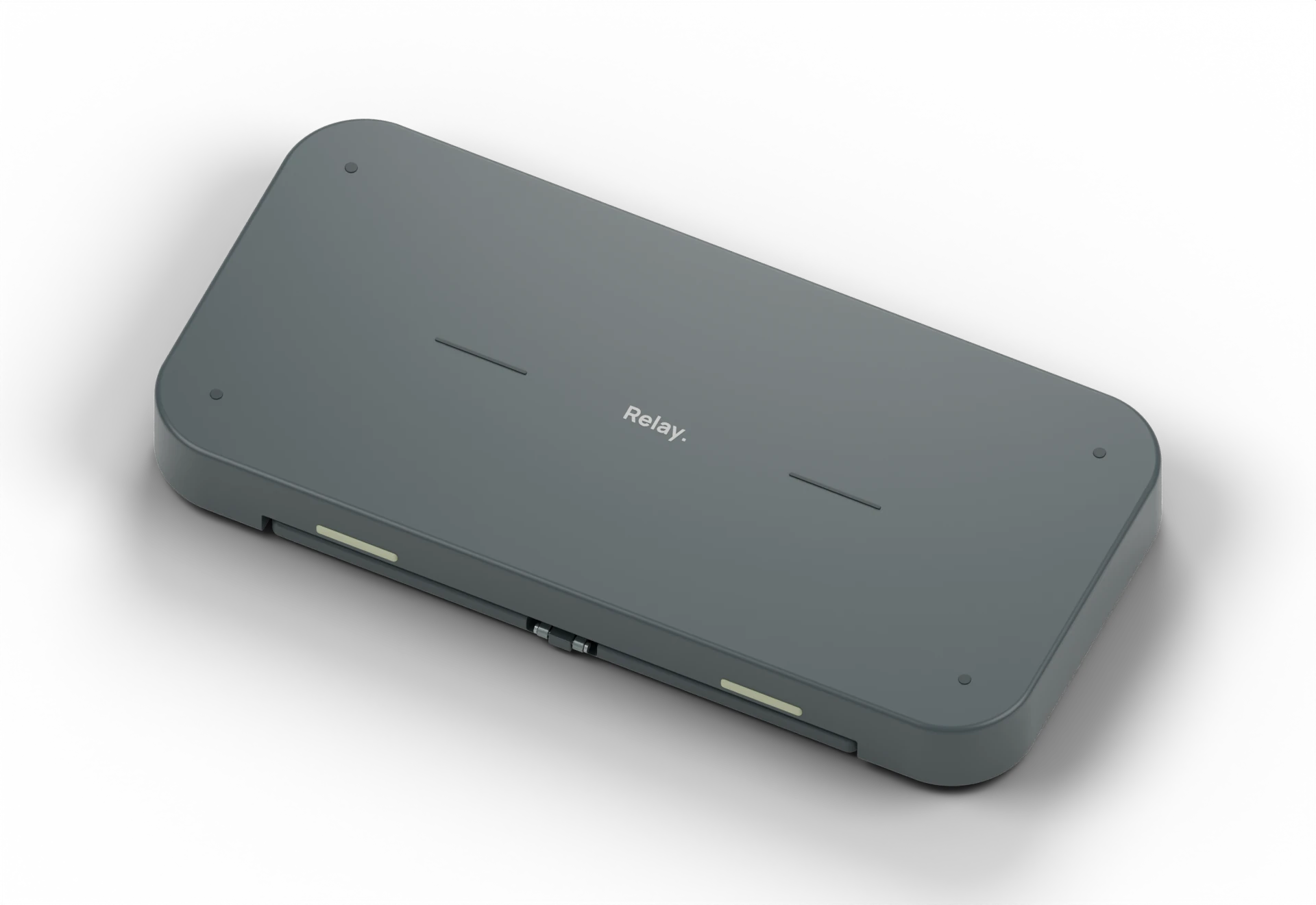
Relay is my hobby hardware project: a music-first handheld with a physical keyboard and a swiveling display.
R8 · October 2026. A hardware design study. Images and film are design renders; dimensions describe the model, not measured hardware.
Why this form
The idea is to give listening its own device, with a keyboard for finding an album, making a queue, or writing a short note. Music comes first; optional apps would have to earn their place in that experience.
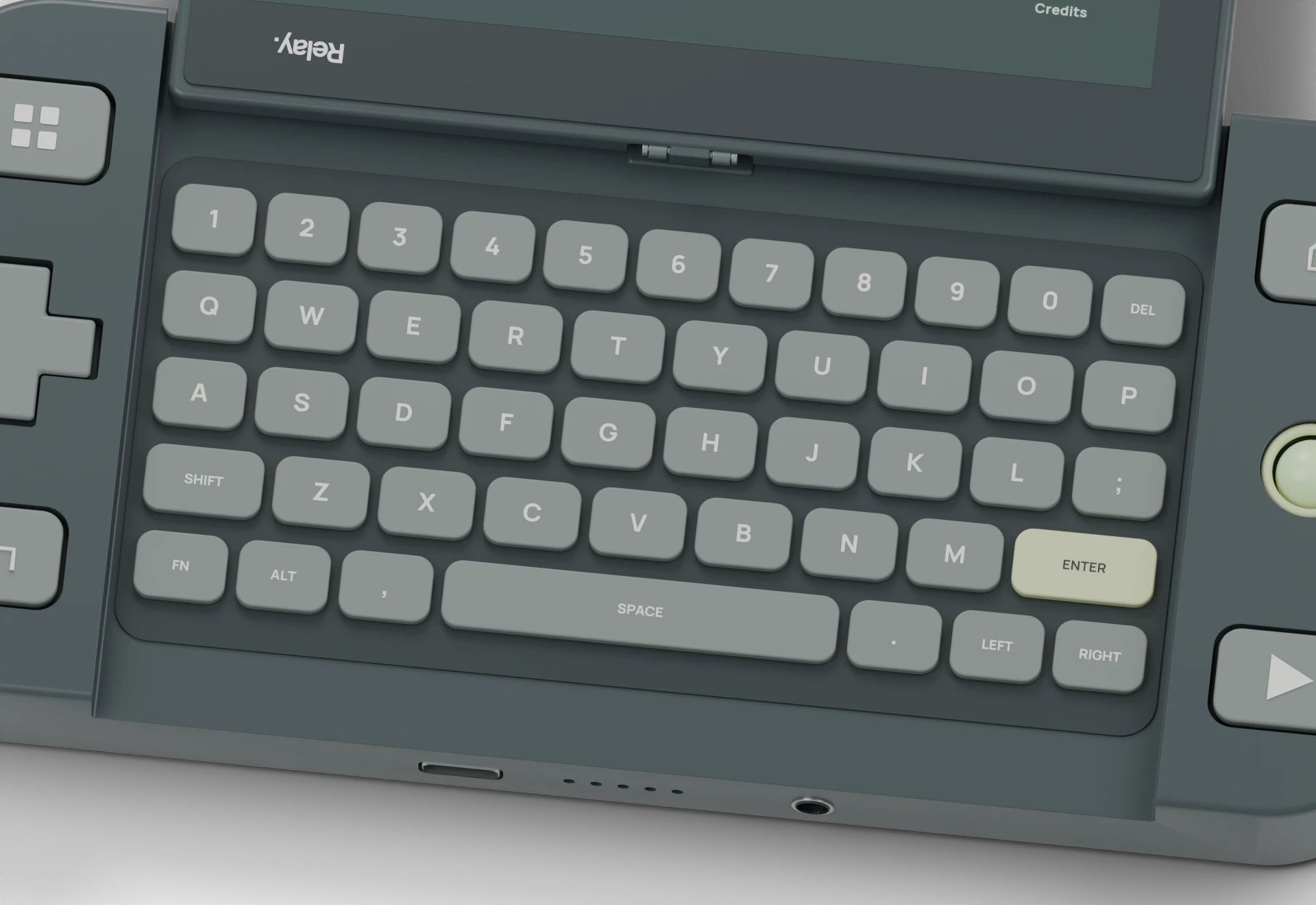
The display rotates in the plane of the body to uncover the keyboard, with a small tilt as it opens. R8 keeps the left D-pad and right trackball, recesses the controls into the shell, enlarges the key legends, and removes the cameras.
Size and movement
| Body footprint | 172 × 82 mm |
|---|---|
| Body shell height | 17.5 mm |
| Height at trackball peak | 19 mm |
| Display cassette | 116 × 80 × 4 mm |
| Planar swivel | 180° |
| Peak tilt | 14° |
These are dimensions of the current visual assembly. The open envelope, swivel clearance, internal component fit, wall thicknesses, tolerances, and final weight are not established hardware specifications.
Keyboard, connections, and enclosure
The cable is still the hard part
The display needs an interconnect that can accommodate both swivel and tilt inside a protected path. The current packaging study separates an annular yaw channel from a constrained service bend, with clamps at the terminations.
Both cable candidates fail. The provisional 3 × 0.10 mm flex and 0.60 mm wire envelope have minimum sampled bend radii of about 0.255 mm and 0.355 mm. Their service leads kink, contact themselves, and intersect the source R7 housing. This comparison does not validate the R8 enclosure.
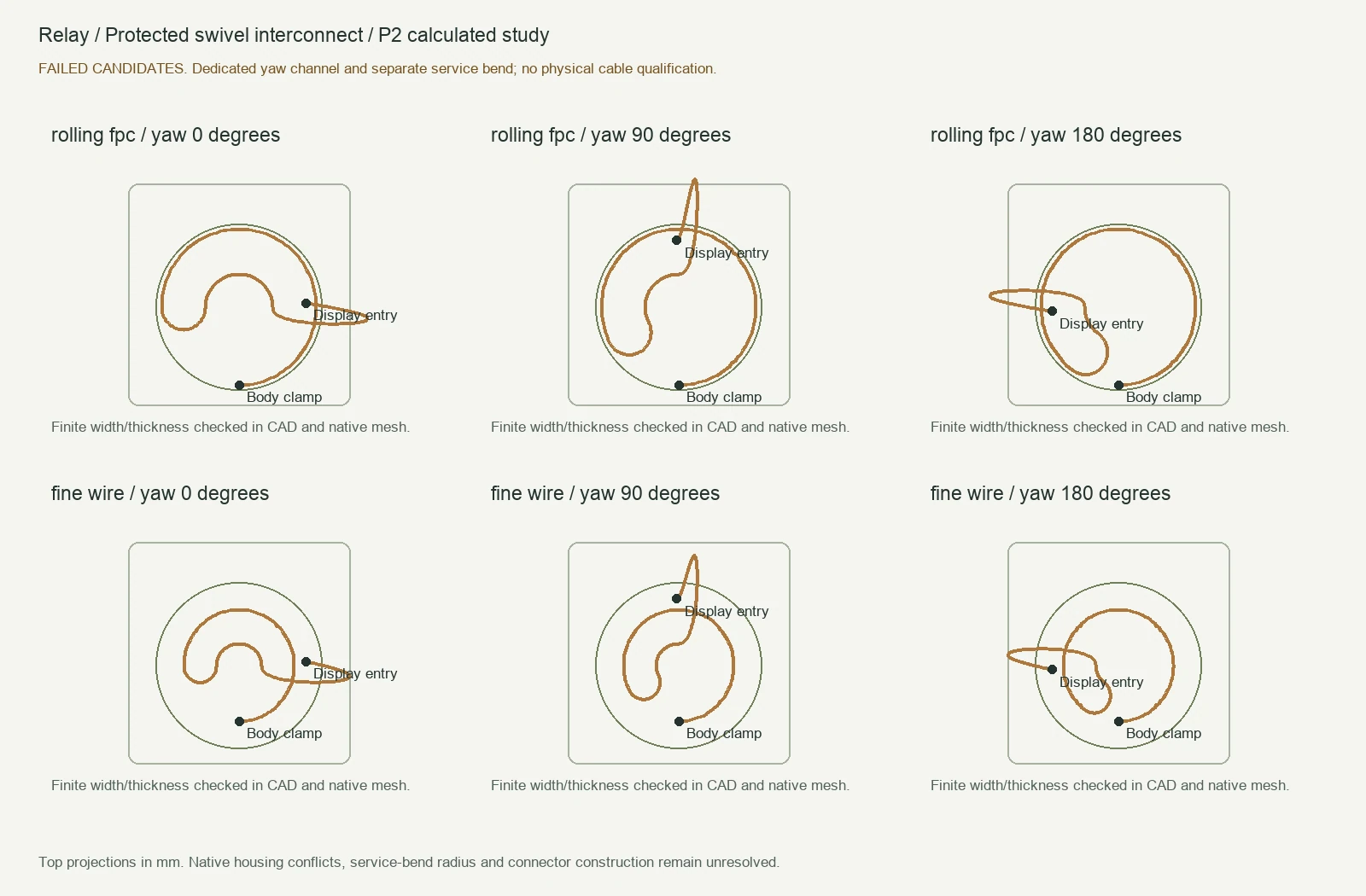
The next route needs the actual display interface, conductor count, connector frames, shielding requirements, and supplier dynamic bend limits. Then the guide, service bend, hollow support, and assembly access can be designed around that stack. A larger cover alone does not solve the failed bends.
What remains to prove
There is no integrated working hardware or qualified display cable yet. Electrical behavior, cable fatigue, battery life, thermal performance, control feel, and enclosure reliability still need physical testing. No measured audio performance, app compatibility, or manufacturing readiness is claimed.
The browser demo explores Music and Journal interactions. It is a software demonstration, not evidence of device electronics or app support.
Explore the browser demo ↗Back to Zachary Obasiolu